

Myth 1: "Humans Only Use 10% of Their Brain"
The myth that humans utilize only 10% of their brain capacity is perhaps the most ubiquitous neuromyth in history, repeated in Hollywood movies (Lucy, Limitless) and self-help literature.
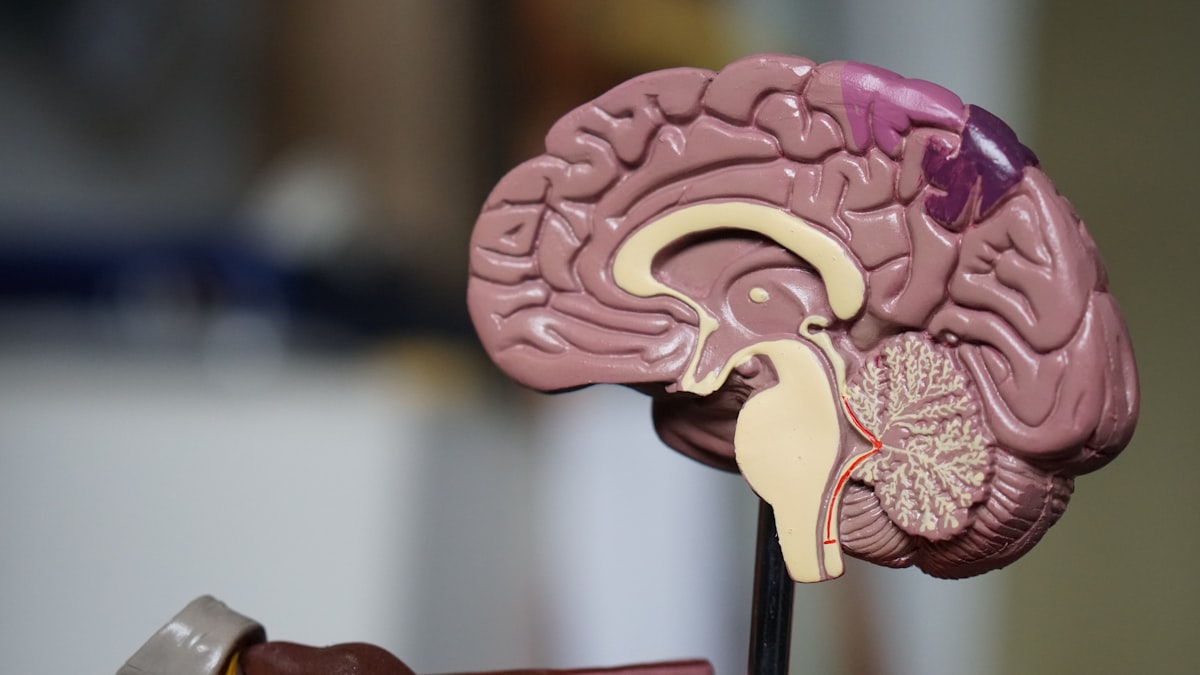
Scientific Reality: From an evolutionary standpoint, the brain consumes 20% of your body's total metabolic energy while representing just 2% of your mass. If 90% were useless, natural selection would have eliminated the metabolically wasteful tissue millions of years ago. Functional MRI (fMRI) and Positron Emission Tomography (PET) show that 100% of the brain is active across a 24-hour cycle, with even simple tasks recruiting widely distributed networks across both hemispheres.
Myth 2: "Left-Brained vs. Right-Brained Personalities"
The pop-psychology claim that logical, analytical people are "left-brained" while creative, artistic people are "right-brained" misinterprets Roger Sperry’s Nobel Prize-winning Split-Brain experiments.
Scientific Reality: While certain sub-functions exhibit lateralization (e.g. Broca's and Wernicke's language areas are left-dominant in 95% of right-handers; visual spatial parsing has right-hemisphere dominance), brain imaging of over 1,000 individuals (Nielsen et al., 2013) proved there is NO evidence of individual left-brain or right-brain dominance. Creative and mathematical thinking both require massive, continuous inter-hemispheric communication across the 200 million axons of the Corpus Callosum.
Myth 3: "Commercial Brain Games Increase General Intelligence"
The $2 billion commercial "brain training" industry claims that playing simple 5-minute puzzle games expands general fluid intelligence (IQ) and wards off dementia.
Scientific Reality: In 2014, over 70 leading cognitive scientists from Stanford University and the Max Planck Institute issued a joint consensus statement: commercial brain games produce Near Transfer (you get faster at playing that specific mini-game), but show virtually ZERO Far Transfer to generalized intelligence, executive problem-solving, or everyday memory retention.
Myth 4: "VARK Learning Styles (Visual, Auditory, Kinesthetic)"
The belief that students learn better when taught exclusively in their preferred "learning style" (Visual vs. Auditory vs. Kinesthetic) remains widespread in education.
Scientific Reality: Controlled psychological trials (Pashler et al., 2008) have consistently failed to find any matching effect: teaching a "visual learner" with visual materials produces no superior retention over text-based learning. The brain retains information best through Multimodal Dual-Coding—combining visual representations with verbal explanations.
What Actually Enhances Human Cognitive Performance?
If commercial brain games and neuromyths fail, what does real neuroscience prove enhances cognitive bandwidth?
1. Cardiovascular Aerobic Fitness: Increases hippocampal volume and circulating BDNF.
2. Sleep Architecture Optimization: Restores prefrontal glycogen and clears metabolic waste.
3. Complex Novel Skill Acquisition: Learning a musical instrument, foreign language, or competitive strategy game builds multi-network synaptic density.
4. Objective Metric Tracking: Using platforms like Human Benchmark to measure true sensorimotor baselines (Reaction Time, Aim, Working Memory) under controlled, repeatable conditions.
- fMRI imaging confirms that humans utilize 100% of their brain across daily activities, thoroughly debunking the 10% myth.
- There is no "left-brained" or "right-brained" personality type; all complex thinking requires integrated bilateral hemispheric cooperation.
- Commercial brain training produces near transfer (game practice) but zero far transfer to generalized fluid intelligence.
- Cardiovascular exercise, adequate deep sleep, and multimodal novel skill acquisition are the true evidence-based drivers of cognitive enhancement.